Business | Schumpeter
Feb 12th 2026_★★★★☆_973words
Listen to this story
Private-equity barons have a giant AI problem
Their leveraged bets on the software industry may soon cause big trouble
DURING THE 2010s there were two reliable ways to make a fortune. The first involved selling enterprise software, the countless computer applications which now dominate office life. Businesses subscribe to these applications, as you might a magazine, as opposed to buying them only once, as you would a book. This “recurring” revenue explains the interest of private-equity funds, the second great gold mine of that era. During the past decade buy-out funds spent one in every three dollars on technology firms. As software ate the world, private equity drank champagne.
在 2010 年代,有两种可靠的致富途径。第一种是销售企业软件,即如今主宰办公环境的无数计算机应用。企业通过订阅方式使用这些应用,如同订阅杂志,而非像买书那样一次性买断。这种“经常性收入”让私募股权基金趋之若鹜——这正是该时代第二座金矿。过去十年间,收购基金每投资三美元,就有一美元投向科技公司。当软件吞噬世界时,私募股权正举杯庆贺。
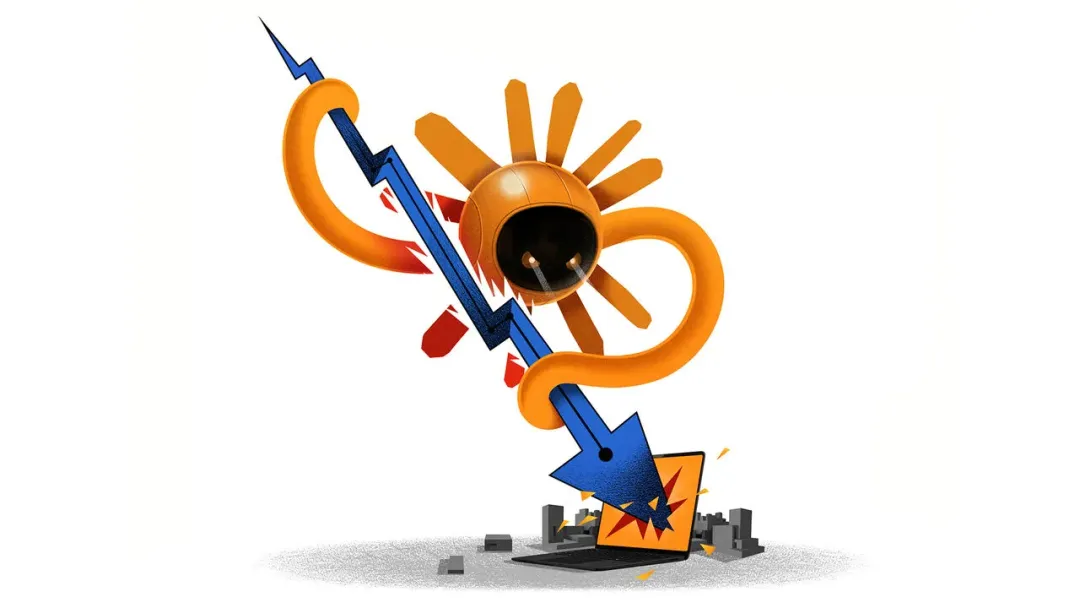
Central banks fractured this alliance when they raised interest rates in 2022. Now Claude Code threatens to shatter it. The judgment in public markets has been definitive—and the selling indiscriminate. Traders expect customers and startups armed with AI-coding tools like Anthropic’s Claude to beat up incumbent software firms. Marketing tools? Thwack! Legal tech? Crunch! Financial-data providers? Pow! The value of listed software firms has fallen by a fifth this year, and the chill is drifting through the few public windows investors have onto private markets, where assets change hands less frequently. Loans to software firms owned by private equity have tumbled, along with the value of funds that own those loans and the asset managers which run those funds.
2022年各央行加息打破了这种联盟。如今,Claude Code 恐将使其彻底瓦解。公开市场的裁决一直是决定性的,且抛售更是无差别的。交易员预期,装备了Claude 等 AI 编程工具的客户和初创公司,将重创现有软件企业。营销工具?重击!法律科技?粉碎!金融数据供应商?重创!上市软件公司的市值今年已蒸发五分之一,且这股寒意正透过少数窗口,向流动性较低的私募市场蔓延。私募持有的软件公司贷款额骤降,持有这些贷款的基金及管理这些基金的资产管理公司价值也同步下跌。
When private-capital firms reported their earnings in recent days, analysts’ questions about their exposure to software forced bosses to go against their instincts and offer the lowest number they could. TPG admitted that 18% of the money from its buy-out funds was in the software industry. KKR and Blackstone tannoyed a lucky 7% to the market, calculated across their vast asset-management operations. Nothing to see here, said Carlyle: 6%. Brookfield went for “less than 1%” and Apollo, which has encouraged the rout by short-selling software loans, crowed that exposure to software in its private-equity funds “rounds to zero”.
在近日私募机构公布财报时,分析师关于软件行业风险敞口的追问,迫使一众高管违背本能,报出了尽可能低的数据。德太资本(TPG)承认其收购基金中 18% 的资金投向了软件业。KKR 和黑石集团则向市场广播了一个幸运的数字——7%,这是基于其庞大的资产管理业务计算得出的结果。凯雷投资集团(Carlyle)表示“没什么可看的”:这一比例为 6%。博枫集团(Brookfield)给出的数字是“不足 1%”而通过做空软件贷款助长了这场暴跌的阿波罗(Apollo)则吹嘘道,其私募股权基金的软件敞口“几乎为零”。
rout /raʊt/vt.&n.击溃(敌人),使彻底溃败;彻底击败(对手)→ rout someone out phrase赶走(某人),将(某人)撵走,驱赶(某人)
crow /krəʊ/ v.夸耀;夸口,自夸<贬>
There are good reasons for private-equity bosses to downplay the importance of a business that made them rich. The biggest have refashioned themselves, with varying levels of success, as safe, all-weather lenders to every part of the economy, rather than leveraged equity investors beholden to cyclical performance fees.
私募巨头们有充分的理由去淡化这项曾令其致富的业务。这些顶尖机构已完成转型——尽管成功程度各异——将自己重塑为面向各经济领域、稳健且全天候的贷方,而非受困于周期性业绩报酬的杠杆股权投资者。
downplay /ˌdaʊnˈpleɪ/vt.对…轻描淡写;贬低;低估
beholden /bɪˈhəʊl.dən/adj.受惠的;感激的;欠人情的
But the troubles will not be easily brushed aside. Applying the valuations of traded software firms to private-equity portfolios is a stomach-churning exercise. During the past five years the value of software firms in the S&P 500 index has fallen from 13 to eight times their revenue over the previous 12 months; across all listed American software firms the figure has gone from eight to three times. Compare that with the 25 largest private-equity buy-outs of traded software firms between 2019 and 2022, for which the median deal was struck at nine times the target firm’s revenue. This class has so far yielded the odd disaster (Pluralsight, which makes video-training courses for software engineers, messily restructured its debt in 2024) and the occasional success (the revenue of SailPoint, a cyber-security firm, doubled in the three years after it was taken private by Thoma Bravo). Mostly, though, the software firms remain stuck in ageing funds with investors worriedly guessing their true worth.
但这些麻烦并非轻易就能化解。若将上市软件公司的估值套用于私募股权投资组合那将是一场令人反胃的推演。过去五年间,标普500指数中软件企业的估值从过去12个月营收的13倍跌至8倍;全美上市软件企业整体估值则从8倍跌至3倍。与2019至2022年间25起规模最大的私募股权收购上市软件公司案例相比,其交易中位数为目标公司营收的9倍。这类交易迄今既出现过灾难性案例(为软件工程师提供视频培训课程的 Pluralsight 在2024年进行了混乱的债务重组),也有零星成功案例(网络安全公司SailPoint在被Thoma Bravo私有化后的三年里收入翻倍)。但是,绝大多数软件公司仍困于老化的基金中,投资者们则在焦虑地猜测其真实价值。
brush someone/something asidephrase对…置之不理;漠视
odd /ɒd/adj.(指一对或一组事物中)单个的,单只的,不成对的
More important than the fate of the funds which own software firms is the debt that paid for their deals. Analysts reckon more than $500bn of borrowing tied to software firms is lurking in America’s credit markets. A popular comparison is with the energy industry a decade ago. During the shale boom, exploration businesses borrowed heavily before an oil-price crash in 2014 caused defaults to spike in the bond market. If things go wrong this time, who will be left holding the bag?
相比持有这些软件公司的基金命运如何,更关键的是支撑这些交易的债务。分析师估算,美国信贷市场中潜伏着超过5000亿美元与软件公司挂钩的借款。业界常将其类比十年前的能源行业:页岩热潮中勘探企业大量举债,直到2014年油价崩盘引发债券市场违约潮。如果这次重蹈覆辙,谁将成为最终的接盘者?
be left holding the baby/bagidiom被迫独立撑起局面,不得不承担起(别人丢下的)责任
Unlike during the shale boom, and the hyperscalers’ current data-centre debt binge, software borrowers make up only a sliver of the bond market. Instead, buy-out deals were funded primarily by loans, which have floating rates and place more restrictions on the borrower. Perhaps 16% of the leveraged-loan market is tied to software deals, much of it housed in collateralised-loan obligations, an instrument similar to the one that broke financial markets in 2008. The largest bets on software debt, though, are found in business-development companies (BDCs), a type of corporate-lending fund often run by the biggest private-markets firms.
与页岩热潮时期及当前超大规模企业数据中心债务狂潮不同,软件业借款方在债券市场中仅占极小份额。相反,收购交易主要依靠贷款融资,这类贷款通常采用浮动利率,且对借款方有更多限制。在杠杆贷款市场中,或许有16%与软件交易挂钩,其中大部分被打包进担保贷款凭证(CLO)——这种金融工具与2008年引发金融市场崩盘的工具颇为相似。不过,对软件债务最大规模的押注出现在商业发展公司(BDC)中,这类企业贷款基金通常由最大的私募市场公司运营。
BDCs come in two types. The majority of assets sit in vehicles that are not publicly listed. Investors can redeem their shares in the fund each quarter. The largest is Blackstone’s BCRED which, were it a standalone bank, would be America’s 34th-biggest. Fully 26% of its loans are to software firms, mainly owned by private-equity funds. Other BDCs are traded on the stockmarket, which means investors can sell their shares whenever they want. The largest is run by Ares and has invested 24% of its assets in software loans. In recent weeks some investors have panicked. Listed BDCs trade at a growing discount to the value of their assets (net of debts). Last month investors in an unlisted BDC run by Blue Owl that has at least 29% of its portfolio in software debt pulled 15% of their money out. If funds start to prevent (or “gate”) redemptions, a downward spiral may follow.
BDC分为两类:多数资产存放于非上市投资工具中,投资者每季度可赎回基金份额。其中规模最大的是黑石集团的 BCRED基金,若将其视为一家独立银行,它将是美国第 34 大银行。该基金足足有26% 的贷款流向了软件公司,且这些公司主要由私募股权基金持有。另一类 BDC 则在股市交易,这意味着投资者可以随时卖出股份。该类别中规模最大的一家由 Ares 管理,其24%资产投向了软件贷款。最近几周,部分投资者陷入恐慌。上市 BDC 的交易价格较其(扣除债务后的)资产价值折价不断扩大。上个月,Blue Owl管理的一家非上市BDC遭遇资金撤离,该机构至少29%的投资组合为软件债务,投资者赎回了15%的资金。如果基金开始阻止(或“设限”)赎回,下行螺旋可能随之而来。
一语双关。既指金融家们的“典型行为”,也暗指其赖以生存的“财务模型”。结合文末提到的“refresh their models”指出他们既要更新 Excel 中的数据模型,也必须改变看待这个行业的思维模式。
Model behaviour
Soul-searching financiers looking for a bullish case for software companies might find one by looking at their own industry. Traders mostly rely on a single piece of technology, the Bloomberg terminal, which has proved impervious to efforts by customers and competitors to create their own replacements. The work of investment bankers and private-equity bosses has been largely immune to changes in office software. They still spend much of their days labouring over Microsoft Excel, just as they did a generation ago. Even so, if the software crash persists, they may have to refresh their models. ■
模型行为
陷入反思的金融家们若想为软件公司寻找看涨理由,或许可以观察一下自身行业。交易员主要依赖单一技术——彭博终端(Bloomberg terminal),事实证明,无论是客户还是竞争对手,开发替代方案的努力在其面前都无功而返。投资银行家和私募巨头的工作也基本未受办公软件变革的影响。他们的大部分时间仍耗在微软 Excel上,正如上一代人那样。即便如此,如果软件行业的崩盘持续下去,他们恐怕也不得不更新一下自己的估值模型了。
impervious /ɪmˈpɜː.vi.əs/adj.不能渗透的;无动于衷的, 不受影响的
labour /ˈleɪ.bər/ vi.艰难地做,费劲儿地工作